Keynote Speaker
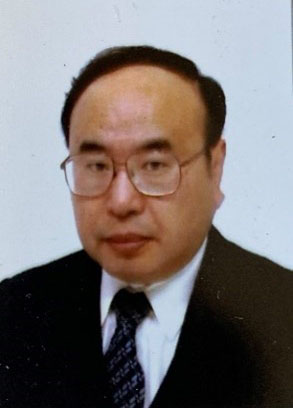
Nao-Aki Noda
Professor EmeritusKyushu Institute of Technology, Mechanical Engineering Department, Kitakyushu 804-8550, Japan
Concurrent Professor: Northeastern University, Henan University of Science and Technology, East China Jiatong University
Guest Professor: Shandong University, Shandong University of Technology
Speech Title: Effect of Adhesive Geometry on Nominal Lap Joint Strength Defined as Average Stress in JIS
Abstract: The JIS standard defines adhesive strength as the nominal stress per unit area of the bonded surface of a small test specimen. This is a basic material strength index that does not consider stress concentration at the bonded ends. In actual structures, the singular stress field strength (ISSF) depends on the shape and dimensions of the joint, so the measured adhesive strength changes depending on the ISSF. This paper uses ISSF analysis and previously published experimental results to verify how the shape of the joint affects the JIS strength of a typical lap joint and clarifies the following:
1) Reported nominal strengths for resin/metal combinations differ by specimen geometry. Butt joints show nominal strengths ranging from 18.8-44.8 MPa (mean 31.8 ± 13.0 MPa), while lap joints show nominal strengths ranging from 11.7-26.1 MPa (mean 18.9 ± 7.19 MPa). The mean butt-joint strength divided by the mean lap-joint strength is about 1.7, so butt-joint strengths exceed lap-joint strengths on average.
2) Geometry dependence differs markedly between butt joints and lap joints. Butt-joint nominal strength varies by roughly a factor of three as adhesive thickness changes over a typical range (0.10-1.0 mm). Lap-joint nominal strength is strongly controlled by bond length and adherend thickness. For FM73 film on aluminum with an adherend thickness of 7 mm, increasing the bond length from 10 mm to 100 mm reduces lap-joint nominal strength from 28 MPa to 10 MPa (about one third). With a bond length of 25 mm, the lap-joint nominal strength remains 28 MPa as adherend thickness falls from 100 mm to 10 mm, but a further reduction to 1.6 mm (the JIS condition) lowers the lap-joint nominal strength to 10 MPa.
3) For short bond lengths, yielding can occur through the adhesive layer so the maximum shear stress approaches the bulk shear strength, an upper bound that can be misread as ideal cohesive failure. For long bond lengths, however, the intrinsic strength is governed by a constant ISSF for the lap joint. Modeling a fictitious interfacial edge crack and comparing stress intensity factors for lap and butt joints yields predicted JIS ratios of butt-joint nominal strength to lap-joint nominal strength between 1.57-1.69, matching the experimental value of about 1.7. Finally, the relative nominal strengths depend on material pairing, bonded area, adherend thickness, and adhesive thickness.
Biography: Nao-Aki Noda received his Ph.D. degree in Mechanical Engineering from Kyushu University, Japan in 1984. He has been doing research and teaching at Kyushu Inst. Tech., Kitakyushu, Japan, 1984-2022. He is an author of Theory of Elasticity useful for engineers and a co-author of Safety Engineering for Workers in Industry and other several books. He is a co-editor of Stress Intensity Factors Handbook, vol. 4 & 5, Advances in Finite Element Analysis for Computational Mechanics. He is a recipient of Outstanding Paper Medal of Japan Soc. Tech. Plasticity, Sokeizai Industry Technology award from the Materials Process Tech. Ctr., a fellow of JSME (Japan Soc. Mech. Engrs.) and a fellow of JSAE (Soc. Automotive Engrs. Japan), JSMS Award for Academic Contribution and JSME Materials and Mechanics Division Award. Nao-Aki Noda supervised more than 28 PhD students including 18 international students, most of whom are supported by MEXT. He also supervised more than 30 international master students most of whom are working in Japanese companies. He invited more than 25 international researchers to Kyushu Tech for collaboration. For contributing to the development of excellent international students and foreign researchers, he received the Commendation of Consulate-General of China in Fukuoka. His achievements include research in stress analysis for notched material testing specimens, and development for large ceramics structures used for steel manufacturing machinery and special bolt-nut connection improving anti-loosening and fatigue strength. In 2025, he received the Society of Automotive Engineers of Japan's Best Paper Award and the International Society for Advanced Materials' Advanced Materials Scientist Medal.